
Food Sensitivity Tests, “Leaky Gut,” and What the Science Actually Says
This article is an evidence-informed overview, not a diagnosis. It explains how food sensitivity testing can be used as a structured starting point for personalised nutrition—especially when results are interpreted carefully and supported by a qualified healthcare professional.
TESTING
Antonia Mantakaki Wright BSc, MSc
5/20/20268 min read


Food sensitivity tests have become a popular option for people looking for a more structured way to explore recurring symptoms such as bloating, headaches, fatigue, skin flare-ups, and digestive discomfort. For many, they offer a practical starting point for identifying possible trigger foods and beginning a more personalised conversation about diet and symptom patterns.
So what are these tests actually measuring? How long have they been around, what role does ELISA play, and why do experts disagree so strongly about whether the results are useful?
First, a crucial distinction: sensitivity, intolerance, or allergy?
Before diving into testing, it’s important to distinguish between three commonly confused terms:
Food allergy – an immune system reaction involving IgE antibodies that can trigger severe or life-threatening reactions.
Food intolerance – difficulty digesting certain foods, such as lactose intolerance.
Food sensitivity – a broader and less clearly defined category that may involve delayed symptoms like bloating, headaches, fatigue, or skin irritation.
Traditional allergy testing for IgE-mediated allergies is well established in medicine. Food sensitivity testing, however, remains more controversial because the biological mechanisms are not always clearly understood.
How did food sensitivity testing become so popular?
The concept of food reactions has existed for decades, but modern blood-based food sensitivity testing became commercially popular in the late 1980s and 1990s. During this period, laboratories began offering tests that measured IgG antibodies against foods. The idea was straightforward: if the immune system produced antibodies after exposure to certain foods, perhaps those foods were contributing to symptoms. As wellness medicine and direct-to-consumer health testing expanded in the 2000s and 2010s, these tests became widely available online and through pharmacies and functional medicine clinics.
What these tests measure: the role of ELISA
Most food sensitivity blood tests use a laboratory technique called ELISA, which stands for: Enzyme-Linked Immunodeficient Assay. ELISA is a widely used laboratory technology employed in medical diagnostics, infectious
disease testing, hormone testing, and research laboratories worldwide.
How ELISA Works: In simple terms, ELISA measures whether antibodies
in your blood react to specific substances.
Here’s the basic process:
Tiny amounts of food proteins are attached to a testing plate.
A blood sample is added.
If antibodies (usually IgG) recognize those foods, they bind to them.
An enzyme-linked marker creates a color change.
The intensity of the colour indicates the amount of antibody activity detected.
The stronger the reaction, the higher the reported “sensitivity” score. The technology itself is well established, analytically robust, and widely used across clinical laboratories. In food sensitivity testing, its main strength is that it provides a structured, reproducible way to measure antibody reactivity patterns. The real value often comes when those results are interpreted in context; alongside symptoms, diet history, and a clinician-guided elimination-and-reintroduction plan.



Another issue: consistency and clinical usefulness
Clinical usefulness depends on more than one laboratory number, but modern ELISA platforms do offer important advantages: standardised reagents, scalable testing, quantitative readouts, and reproducible workflows when quality controls are in place. This is one reason ELISA remains such a trusted immunoassay technology across diagnostics and research. In food sensitivity testing, these strengths make it a practical platform for generating results that can then be interpreted responsibly in clinic.
Appropriate expectations still matter. Food sensitivity testing is most useful when used to narrow possibilities, prioritise foods for temporary elimination, and reduce the guesswork of broad exclusion diets. It is less helpful when presented as an absolute list of “good” and “bad” foods for life.
This is where healthcare professionals add real value: they can connect the lab report to symptoms, screen for red flags, protect nutritional adequacy, and supervise a structured reintroduction plan so the process is both safer and more informative.
What about other testing methods?
Not all tests marketed as “food sensitivity” assessments are equal. ELISA-based IgG testing at least uses an established laboratory platform, but many other commercial approaches have even less evidence behind them. The key issue is not whether a machine can detect a signal; it is whether that signal has been shown to diagnose a meaningful clinical problem.
So, are food sensitivity tests worth paying for?
For the right person, and especially with professional support, food sensitivity testing can be a worthwhile investment. Its greatest value is not in delivering a one-step diagnosis, but in helping create a more focused, personalised, and manageable nutrition plan.
Most Helpful When:
· you have recurring symptoms that seem food-related but are hard to pin down
· you want a more targeted alternative to eliminating many foods at random
· you plan to use the results as a starting point for a time-limited elimination-and-reintroduction process
· you are working with a dietitian, nutrition practitioner, pharmacist, or physician who can interpret the report in context
Potential Benefits of a Guided Approach:
· results can help prioritise which foods to trial first
· a structured report can improve adherence and reduce trial-and-error
· professional supervision can lower the risk of unnecessary restriction
· symptom tracking and reintroduction can make the findings more clinically meaningful
· the process can support broader nutrition and gut-health goals
This more structured approach is one reason supportive studies are clinically interesting. In IBS, for example, both older and newer randomised trials have found better symptom outcomes with IgG-guided elimination diets than with comparison diets, suggesting that the test may offer practical value when used with clear dietary instructions and follow-up.
Why healthcare professional support matters
Working with a qualified professional helps turn a test result into a sensible plan. Clinicians and dietitians can rule out red flags, tailor the elimination period, maintain dietary diversity where possible, and guide reintroduction so that the final outcome is a sustainable pattern—not a long list of foods avoided out of uncertainty.
Professional oversight can also help prevent common problems such as:
nutrient deficiencies
increased food anxiety
disordered eating patterns
reduced dietary diversity
This is especially important for children and people already dealing with digestive or autoimmune conditions.
A balanced, evidence-based takeaway
Food sensitivity testing sits in an evolving space between personalised nutrition and conventional medicine. Used carefully, it can provide a practical framework for identifying candidate trigger foods and organising a targeted elimination strategy. The laboratory platform behind many of these tests—ELISA—is credible, well understood, and widely relied upon in healthcare. Emerging research, particularly in IBS, suggests that ELISA-based IgG testing may have meaningful clinical value when it is used to guide a monitored elimination-and-reintroduction process. That does not mean every result should be treated as definitive. Rather, the strongest use case is as part of a wider assessment that respects symptoms, dietary context, and the patient’s response over time.
That does not automatically mean every person’s experience is invalid. Human health is complex, and nutrition is deeply individual. Many people discover meaningful dietary patterns through careful experimentation, elimination diets, and symptom tracking. The key is to use these tools responsibly.
Food sensitivity tests should ideally be:
one piece of a larger health investigation
interpreted cautiously
paired with professional guidance
used to encourage awareness rather than fear
This article is for informational purposes only and does not constitute medical advice. Any decisions regarding supplementation, testing, or hormone therapy should be made in consultation with a qualified clinician.
Final thoughts
Food sensitivity testing is best understood as a practical clinical tool with growing—though still developing—evidence behind it. For many people, especially those with persistent food-related symptoms, it can offer a more personalised starting point than guesswork alone. The best outcomes are most likely when test results are interpreted with support from a qualified healthcare professional who can connect the laboratory findings with symptoms, medical history, and a realistic dietary plan. The most productive approach is often the simplest:
listen to your symptoms
track patterns carefully
support overall gut health
work with qualified healthcare professionals
focus on long-term dietary balance instead of chasing perfection
At its best, food sensitivity testing can encourage people to become more engaged with their health, more intentional with nutrition, and more aware of how their body responds to food. And even amid the controversy, that growing awareness may ultimately be the most valuable outcome of all.
Why food sensitivity testing became linked to gut barrier health
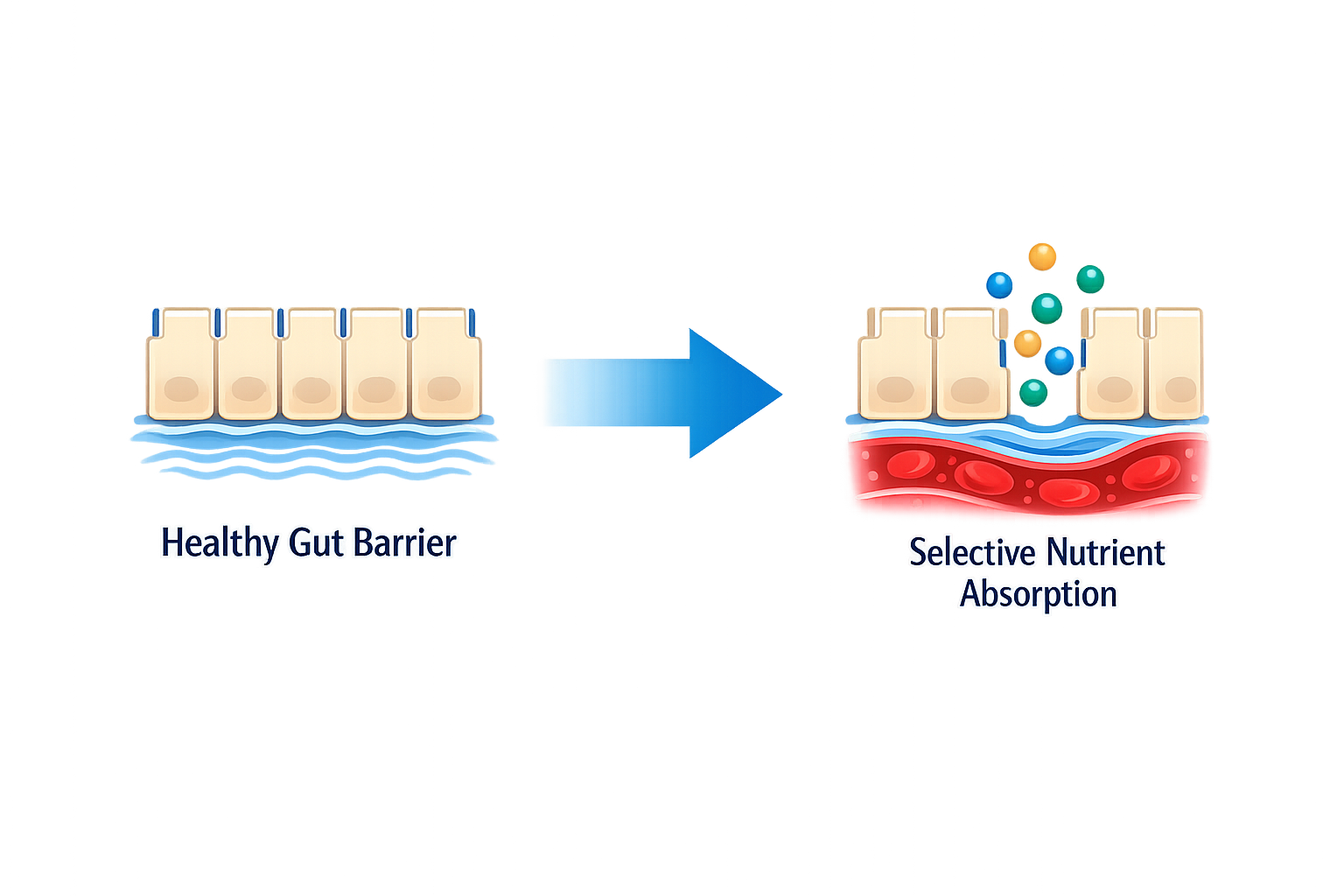
Functional and integrative medicine practitioners often view food sensitivities and intestinal permeability as part of a cycle:
Gut irritation or inflammation increases intestinal permeability.
Food proteins cross the gut barrier more easily.
The immune system reacts by producing antibodies.
Ongoing immune activation may contribute to symptoms.
This model is biologically plausible, but researchers are still debating how strong and clinically meaningful these connections truly are for the average person.
In other words:
the theory has scientific foundations
but many conclusions remain under investigation
Why IgG Testing Became Popular
Many people struggle with chronic symptoms that are difficult to explain:
digestive discomfort
migraines
fatigue
eczema
brain fog
joint pain
Food sensitivity testing offers a seemingly personalized roadmap to better health. Instead of guessing, people hope the test will identify trigger foods quickly. For many individuals, receiving a structured report can be genuinely helpful. It may focus attention on recurring symptom patterns, improve adherence to a targeted elimination plan, and provide a practical framework for discussing next steps with a practitioner rather than relying on trial-and-error alone.
What does the evidence say about IgG food sensitivity testing?
The evidence base is mixed—but it is more encouraging than many summaries suggest. While some professional organisations remain cautious about using food-specific IgG as a standalone diagnostic label, several clinical studies have reported that IgG-guided elimination diets can improve symptoms in selected groups, particularly people with irritable bowel syndrome (IBS) and some patients with recurring food-related complaints.
It is true that food-specific IgG can reflect exposure to foods. But that does not automatically make the measurement meaningless. In clinical practice, a biomarker can still be useful if it helps identify patterns that guide a more personalised and testable nutrition strategy. The key question is not whether IgG exists, but whether combining antibody data with symptoms and professional supervision improves outcomes for the individual patient.
Research suggests that IgG antibodies may simply indicate:
normal exposure to foods
regular consumption of foods
immune tolerance rather than intolerance
A fair reading of the literature is that the field is still evolving. Earlier criticism focused on over-interpretation and inconsistent clinical use, but more recent studies—particularly randomised trials in IBS—have strengthened the case for carefully applied IgG-guided elimination diets. This makes professional interpretation especially important: the test is best viewed as a decision-support tool, not a replacement for medical assessment.
Is intestinal permeability real? Yes. Is it oversimplified online? Also yes.
This is where scientific nuance matters. Intestinal permeability is absolutely real. Researchers have long studied intestinal barrier dysfunction in conditions such as:
celiac disease
Crohn’s disease
inflammatory bowel disease
certain infections
chronic inflammation
In these conditions, increased intestinal permeability has been documented
in scientific literature. Many scientists agree:
gut barrier dysfunction can occur
the microbiome influences immune activity
inflammation affects intestinal health
But they also caution that:
testing for “leaky gut” is not standardised
evidence linking it directly to most food sensitivities is still evolving
many commercial claims exceed current scientific proof
Scientific references
1. Singh P, Chey WD, Takakura W, Cash BD, Lacy BE, Quigley EMM, Randall CW, Lembo A. A novel, IBS-specific IgG ELISA-based elimination diet in irritable bowel syndrome: a randomized, sham-controlled trial. Gastroenterology. 2025;168(6):1128-1136.e4.
2. Atkinson W, Sheldon TA, Shaath N, Whorwell PJ. Food elimination based on IgG antibodies in irritable bowel syndrome: a randomised controlled trial. Gut. 2004;53(10):1459-1464.
3. Hernando A, Morais Costa B, Charneca S, Santos I, Sousa Guerreiro C. Mapping the evidence on IgG-based elimination diets for the management of irritable bowel syndrome in adults: a systematic scoping review. Nutrition Reviews. 2026;nuaf268.
4. Aydin S, Emre E, Ugur K, Aydin MA, Sahin I, Cinar V, Akbulut T. An overview of ELISA: a review and update on best laboratory practices for quantifying peptides and proteins in biological fluids. Journal of International Medical Research. 2025;53(2):1-18.
5. Yang B, Yu H, Yao W, Diao R, Li B, Wang Y, Li T, Ge L, Hu Y, Wang H. Food-specific IgG4-guided diet elimination improves allergy symptoms in children. Frontiers in Immunology. 2024;15:1281741.
6. Mitchell N, Hewitt CE, Jayakody S, Islam M, Adamson J, Watt I, Torgerson DJ. Randomised controlled trial of food elimination diet based on IgG antibodies for the prevention of migraine-like headaches. Nutrition Journal. 2011;10:85.
Olympian Wellness Ltd trading as Olympian Wellness Clinic
Registered address: 57 High St, Hanham, Bristol, BS15 3DQ
company number: 16675182
© 2026. All rights reserved.


Based and operate at
The Wellness Collective Bristol
57 High Street, Hanham, BS15 3DQ